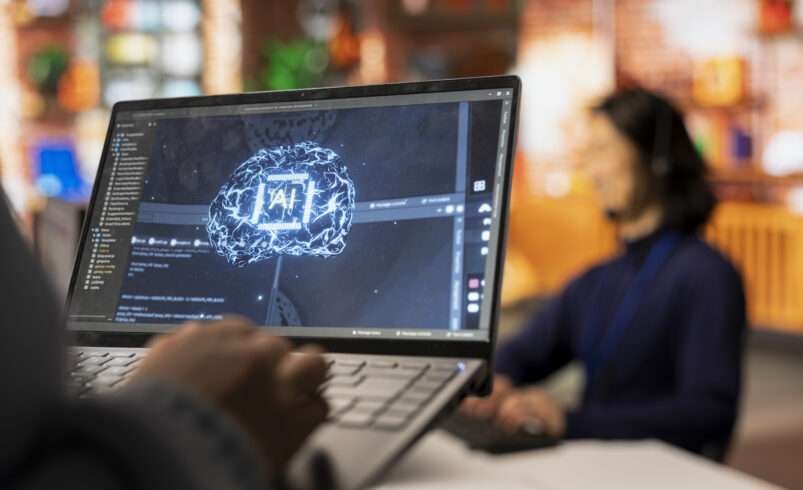
In today’s digital-first economy, user experience (UX) has become a real differentiator for companies. Whether someone is buying online, in a mobile app or via chatbot, they expect speed, personalization and frictionless interaction. Here is where machine learning (ML) comes in as a game changer. Using data and predictive algorithms, machine learning enables the development of smarter, more intuitive, and ever more customized experiences for businesses’ users.
In this piece, we delve into how machine learning is driving more intelligent user experiences, why that’s important, and how companies can harness it successfully.
Understanding Machine Learning In The Context of UX
Machine learning is a type of artificial intelligence that allows software to learn from data points and make decisions with minimal human intervention. ML models don’t adhere to hard and fast rules like a traditional computer program, but they are looking for patterns in the big data and adjusting their output based on what the user wants.
When it comes to UX, machine learning is a technology that’s typically humming along in the background, quietly doing things like:
- Personalize content and recommendations
- Automate interactions
- Predict user needs
- Improve accessibility
- Reduce friction in digital journeys
The result is that you’re playing with something much less like a computer and more akin to an intuitive, human-like thing.
Personalization: The Core of Smarter Experiences
One of the most influential modalities by which ML | Advances User Experience with Personalization can enhance UX is personalization. It’s something that today’s users no longer put up with, or even want, as brands are now supposed to give them customized customer experiences. Now, think about the recommendations provided to you from Netflix or Spotify where they come from highly sophisticated ML algorithms that take into account not only your watching/listening history but also contextual information that can include time of day and location.
- This personalization leads to:
- Relevant product or content recommendations
- Reduced decision fatigue
- Increased engagement and satisfaction
For e-commerce enterprises, ML is about to supercharge product discovery. Rather than making the reader sift through a million options, they get recommended amazing things that cater to their taste. AI-Powered Personalization A study on AI-driven personalization strategies approaches suggests that companies that use machine learning based personalization can see a revenue increase of 10–15%.
Predictive Assistance & Smarter Interactions
But besides recommendations, machine learning can enable systems to anticipate what people may want before they ask for it. This very predictive ability is the thing we trust when using our smart assistants (Siri, Alexa or Google Assistant).
For example:
- A calendar app could alert you to an approaching meeting and offer the most efficient path to it.
- A banking app might be able to detect strange transactions and flag them immediately.
- Example: A shopping platform could nudge you to reorder items that you regularly purchase.
These sorts of predictive thoughts both open the user up to do something else, and build confidence in the product, as there it feels more proactive and helpful rather than reactive.
Seamless Automation With Chatbots & Virtual Assistants
Machine learning is what makes conversational A.I. systems like chatbots and customer support assistants possible, too. And while traditional scripted bots learn nothing beyond their initial training, ML-driven chatbots are trained to get better (i.e., more accurate and contextually aware) with each use.
The benefits include:
- 24/7 availability for customer queries
- Quicker resolutions and fewer human agents
- More natural, human-like conversations
For businesses, that translates to increased customer satisfaction for less money. For users, it implies instant assistance without any exasperating wait times.
Accessibility & Inclusivity Through ML
A truly smart user experience isn’t just convenient, it’s also accessible. Machine learning is working on tearing down walls for the disabled.
For example:
- Computer vision systems can facilitate photo identification for the visually impaired as they describe objects or scenes in a tone of voice.
- Wearable devices and NLP enhance live captioning for the hearing impaired.
- With predictive text and voice activation, all mobility is only a touch away.
These breakthroughs form a digital environment that invites more people to participate fully and at ease.
Reducing Friction With Smarter Interfaces
Friction is a killer when it comes to user experience. Long forms, slow search results, and confusing navigation frequently turn users away. Machine learning is a powerful way to bypass these barriers by:
- Searches that autocomplete to speed searches up
- Detection of fraudulent transactions and systems, therefore involving a lesser amount of verifications
- Smart error correction for a frustratingly smooth writing experience
It’s all simply more enjoyable when the system feels snappy and seems to know what you’re thinking.
Challenges & Considerations
The opportunities presented by ML in UX are vast but not without their challenges:
- Data privacy: Letting go of control. Users might distrust the way in which their data is captured and analyzed. Transparency is key.
- Humans biased by algorithms: Without meaning to, humans can be influenced by poorly trained models and make unfair decisions.
- Over-Automating: If you depend too much on ML, conversations become soulless.
They must strike a new balance between automation and empathy, while reflecting on how machine learning combines (instead of subsuming) human-centric design.
The Future of ML-Powered User Experiences
In the future, we should be able to count on ML becoming more and more integrated in everyday interactions. Everything, from hyper-individualized learning platforms to adaptive healthcare apps, opens up in front of us.
Businesses that are investing in ML-powered UX now aren’t just making customers happier; they are also building digital future-readiness. Based on the Future of Artificial Intelligence, it is predicted that nearly 100% of digital interaction will be applying some form of AI/ML model to optimize the workflow by the year 2030.
Final Thoughts
Machine learning is no longer dystopian sci-fi it’s a reality and the driving force behind how we experience tech daily. Custom interactions, predicting needs, better access, and reduced friction: the meaning of creating a smart experience in being aware that ML is determined to make a valuable difference.
And for companies, integrating machine learning into the UX process is not just an opportunity to do cool things it’s a survival requirement in a world of rapidly changing digital rules.