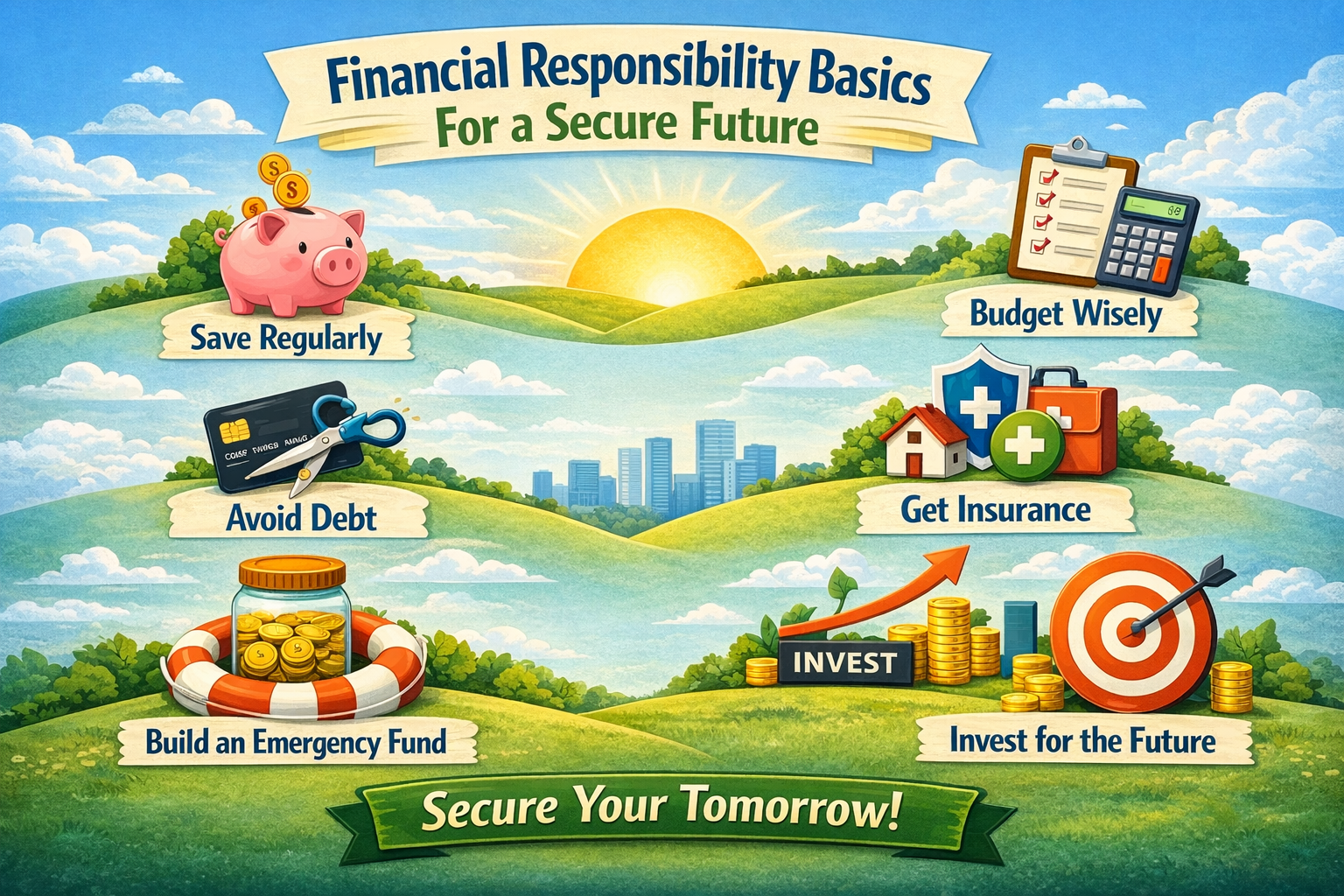
To achieve long-term security, reduce stress, and construct the life you picture, setting financial objectives is a vital first step.
Money might feel aimless without goals, which can cause overspending or lost opportunities. The SMART framework is one well-researched strategy for making objectives more actionable and increasing the likelihood of accomplishment.
If you don’t have a plan, you’re more likely to waste money, fail to save enough, or pass up important financial possibilities. You can stay on track and make educated decisions with a well-structured financial plan, whether your goal is to accumulate wealth, retire comfortably, or erase debt.
You can use these concepts to balance your long-term ambitions with your short-term demands and unforeseen events, from the groceries you need to the retirement you want and the approaching auto repair expense.
On top of that, it can be adjusted to fit your changing needs, which is great because the most effective financial strategies change as we do. Find your current position on the list and begin.
Key Points
- A certain way to achieve financial stability and contentment is to set and reach financial objectives. Relying on recommendations from leading 2025 planning guides:
- Achieving success requires well-defined objectives: Make your goals more specific, measurable, achievable, relevant, and time-bound (SMART) instead of vague and hopeless (like “save more”).
- Prioritize paying off high-interest debt, building an emergency fund (equivalent to three to six months’ worth of spending), and saving for retirement before focusing on more ambitious goals.
- Automatic savings and frequent evaluations are two examples of how consistency builds wealth.
- Being able to adjust is crucial: Reevaluate objectives on a quarterly or yearly basis to account for life’s inevitable adjustments.
- Motivate yourself by celebrating your progress: Doing so keeps you interested and gives you momentum.
Grasping Financial Goals
To achieve financial goals, one must first establish concrete, quantifiable objectives regarding their spending and savings patterns.
With their help, you may see clearly and make plans to achieve your financial pursuits.
By setting these objectives, you are taking charge of your financial destiny, giving yourself permission to act in accordance with your values and ideals while also prioritizing your ambitions.
This goal-setting not only inspires you, but it also directs your financial choices, making the path to financial security and abundance more deliberate and fulfilling.
- Short-term financial Goals: In order to be financially healthy right now and set the stage for future success, it is essential to have short-term financial plans (ranging from one to three years). Some examples of such smaller goals include putting money aside for a much-needed vacation, building an emergency fund, or paying off small debts.
- Intermediate financial goals: To connect short-term successes with long-term ambitions, it is helpful to set intermediate financial goals that range from three to ten years in duration. Saving for a down payment on a home or paying for college are examples of long-term goals that necessitate careful preparation and persistence.
- Long-term goals. A financial plan’s zenith is in its preparation for the long term, or objectives that span ten years or more. Retirement, paying for college, or paying off the mortgage are all long-term goals that necessitate careful planning and investing.
Step By Step Plan and Set Your Financial Goals
Step 1: Assess Your Current Financial Situation
Take stock of your financial situation first and foremost. For a minimum of one month, keep a record of all of your financial transactions.
- Determine your wealth by subtracting your debts from your assets.
- Determine your spending habits; the pros advise allocating 50% to necessities, 30% to wants, and 20% to savings and debt repayment.
Your ambitions will be grounded in reality with this foundation.
Step 2: Arrange Your Objectives in Relation To Duration
We can classify monetary objectives into three broad groups:
- In the near term (less than two to three years), establish routines and stabilize your finances.
- Mid-term (three to five years) – Significant purchases or landmarks.
- Over the long haul (five years or more), you can save for retirement and increase your wealth.
Create stability for longer-term ambitions by prioritizing short-term ones.
Step 3: Execute The SMART Criteria
Now, you need to enhance the chance of success by making your objectives SMART:
- Particular — “Put money into a 401(k)” → “Save for retirement.”
- Quantifiable—Put a figure on your progress.
- Realistic—Considering your current financial situation.
- Appropriate—Match your principles (such as family, vacation).
- Time-sensitive—Determine due dates.
Examples:
- Temporary: “Build an emergency fund of $10,000 (3-6 months’ expenses) by December 2026.”
- In the near future: “Save $20,000 for a home down payment by 2029.”
- In the long run: “Reserve $1 million in retirement savings by age 65.”
Step 4: Shared Objectives Across Life Stages
Always remember, goals change as we become older. Here is an overview backed by research:
- If you want to be financially secure in your 30s and 40s, you should pay off whatever high-interest debt you have, put money aside for an emergency, and start saving for retirement (at least one times your wage) by 30.
- When you’re in your forties, go faster. Your financial goals should include funding your retirement, eliminating debt (including mortgages and student loans), and saving for your children’s college costs.
- 50s to 60s, Level up: By the time you reach 60 years old, you should have saved six to eleven times your annual pay. Be sure to do the same for Social Security and retirement; for instance, once you age 50, you can put an extra $7,500 into a 401(k) each year. Finally, make a plan for when you want to retire.
Step 5: Make a Strategy
Job delegation is essential: Here are the tips to create a strategy
- You should “pay yourself first” by establishing a direct deposit savings system.
- Make a firm financial plan. Use programs or spreadsheets instead.
- Prioritize high-interest bills when taking on debt.
- Exercise caution when making investment decisions. Achieving compound growth requires starting early.
- Continue to review; be sure to update often; adjust to the unexpected changes in life.
Step. 6: Maintain Your Motivation and Be Flexible
Be flexible; priorities can change due to unforeseen life occurrences, so it’s important that you need to keep track of progress, recognize milestones, and be flexible. For tailored guidance, you can consult a financial planner.
Advice on Mapping Your Financial Objectives
To help you achieve your financial goals, here are some practical suggestions supported by research:
- Take an honest stock of where you are right now: Firstly, choose your net worth, keep a record of your income and expenses for a period of one to three months, and base your budget on the 50/30/20 guideline.
- Make use of the SMART model: Every objective should be particular (like “$10,000 emergency fund”), quantifiable (like “track monthly progress”), realistic (like “based on your budget”), meaningful (like “aligned with your values”), and time-bound (like “by December 2026”).
- Sort your goals by time frame: Now you should tackle the most pressing issues (emergency fund, debt reduction), then move on to more intermediate (down payment, vacation), and finally, retirement.
- Make as much automation as you can: Do away with temptation and “pay yourself first” by setting up direct deposits for your savings, bills, and retirement contributions.
- Subdivide large objectives: Subdivide big goals (like saving $1 million for retirement) into smaller, more manageable tasks and keep track of your progress using apps or spreadsheets.
- Regularly review and make adjustments: Hold check-ins every three months; reward progress; and readjust to changes in your life, such as a new job or a growing family.
- Consult an expert when necessary: Mainly in more intricate areas, such as tax planning or investment management, a financial advisor can offer tailored strategies.
Final Note:
Hence, planning and setting financial goals isn’t just about numbers; it’s about constructing the life you actually want, free from financial anxiety and full of possibilities. Keep that in mind as we wrap up 2025 and look ahead to 2026 and beyond.
So, you must build long-term stability, and progress requires an honest evaluation of where you are, the use of the SMART framework, careful prioritization, and regular automation and reviews.
You can also select a single objective, divide it into smaller ones, then commit to achieving them today. That’s the first step.
In addition, your financial situation will improve over time because of these self-disciplined habits, smart investments, and flexibility, allowing you to realize your ambitions of early retirement, vacation, family assistance, or philanthropy.