Forget the Snow Globe: The Grocery Aisle Is the New Souvenir Stand
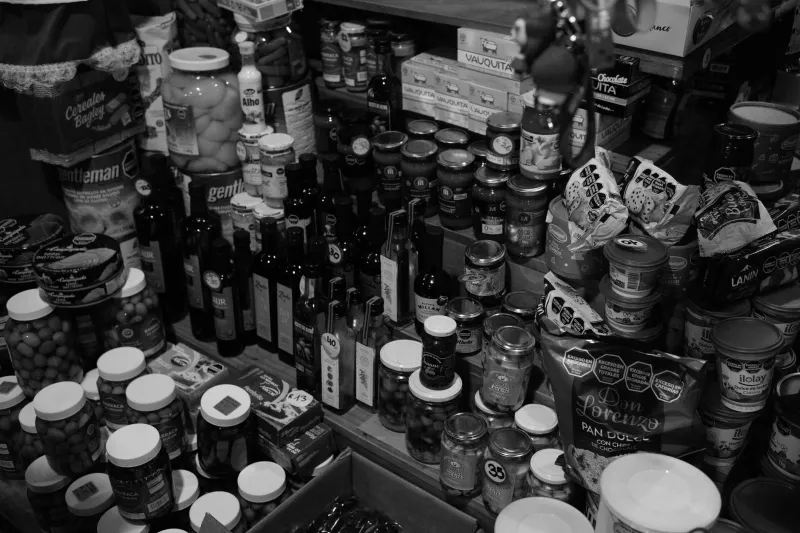
There's a point on every trip when the gift shop stops being fun. You've now seen the same refrigerator magnets in four cities, the same 'I Love [City]' hoodies, the same snow globe featuring a landmark that appears to have been sculpted from memory. Then, on the walk back to wherever you're staying, you pass a supermarket — and it's full of things you have never seen in your life. That's the moment a lot of Americans have started treating as the real souvenir stop.
The shift makes sense. A souvenir shop sells a place as a logo. A grocery store sells a place as it actually eats on a Tuesday night: the sizes families buy, the brands locals argue about, the prices nobody marked up for tourists, the packaging with no English on it at all.
The most honest thing in your suitcase
A jar is a small, dense piece of evidence. It tells you what a culture reaches for when food needs help — how much heat, how much acid, how much funk. It tells you what's considered a staple versus a treat. It tells you what a household keeps in the door of the fridge.
It also tells you something about time. A condiment is often an argument about efficiency: here is how we make a plain dinner interesting in ninety seconds. That's a very human thing to bring home, and it costs less than the hoodie.
A starter list, roughly in order of ambition
- Chile crisp. The gateway purchase. Crunchy, oily, garlicky, and useful on eggs, noodles, rice, dumplings, and — according to people who do this — vanilla ice cream. Buy the version the store actually stocks, not the one your local US grocer marks up.
- Curry roux cubes. The weeknight dinner shortcut in Japan. Break off a block, drop it into a pot with potatoes and carrots, and you've imported an entire home-cooking culture for about six dollars.
- Tinned fish. Portugal and Spain have turned this into a design genre. The pretty tins are the souvenir; the fish inside is lunch.
- Tea, in the box, from a normal store. Not the fancy tin from the fancy shop. The big box that locals actually buy. You'll learn more about how a country drinks.
- Spice blends with a name you can't pronounce. Pul biber, adjika, berbere, shichimi togarashi. Small, light, and impossible to duplicate at home.
- Something sweet in a tin or a tube. Dulce de leche, biscuits, a jam that isn't strawberry. These travel well and disappear fast.
- Instant noodles from a flavor aisle you don't recognize. The cheapest window into a place there is. Two dollars. Packs flat.
Getting it home without a whole saga
Here's the boring but necessary part. In the US, the TSA's 3.4-ounce limit applies to carry-on liquids, and a jar of chile crisp is a liquid as far as a scanner is concerned. If you're buying anything wet, plan on a checked bag.
US Customs and Border Protection asks travelers to declare all food. Packaged, shelf-stable pantry goods are generally fine; fresh produce, meat, and many dairy items are where people get into trouble. Keep your receipts, keep things sealed in original packaging, and if you're unsure, say so at the counter. The declaration line is not the place to get creative.
Practical packing, from people who have learned the hard way:
- Tape the lids. A strip of painter's tape across the cap costs nothing and saves a suitcase.
- Double-bag anything oily. Oily things leak more enthusiastically than watery things.
- Wrap jars in socks. Free padding, and you needed socks anyway.
- Spread the weight. A bag of jars in one corner of a suitcase is how wheels break.
The four-dollar rule
If you're new to this, give yourself a budget cap you won't agonize over — call it four dollars per item. Cheap things you're curious about beat expensive things that look giftable. You will use the four-dollar jar. The forty-dollar one will sit on a shelf for the rest of your life, exactly like the snow globe did.
And buy two of the small stuff. One to try at home, one to hand to a friend with the story attached.
Don't be the person who clears the shelf
A neighborhood market is not a museum gift shop, and it's not restocked for your visit. Take one or two of a thing. If there's a single dusty jar left of something interesting, ask the person behind the counter how they use it before you buy it — that exchange is arguably the better souvenir, and it's free.
The part that keeps paying out
A magnet reminds you that you went somewhere. A jar reminds you on a random Tuesday in February, when you're standing over a pan of eggs with a spoon in your hand and something unfamiliar that tastes like a trip you took a year ago. That's a longer-lasting souvenir than most of what's sold near the exit.
So next time you're walking back to the hotel, skip the shop with the postcard rack. Go one aisle deeper into the store where nobody speaks English and the carts are the wrong size. Buy the weird jar. You'll figure out what to do with it when you get home.