Your Next Power Tool Has a Due Date—and That’s the Point
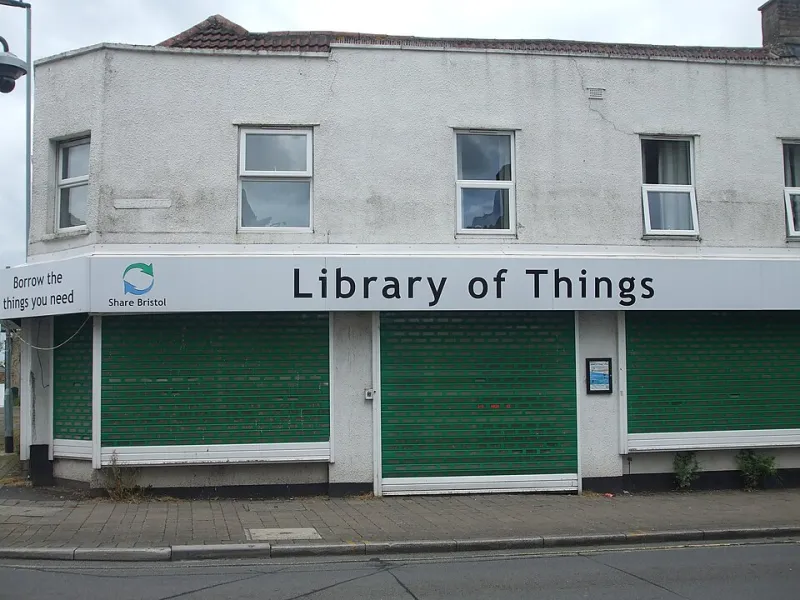
Photo: Neil Owen , CC BY-SA 2.0, via Wikimedia Commons
Somewhere in America this morning, a homeowner is staring at a wall and doing math. The job needs a half-inch drill for about 20 minutes. Buying one means $70, a trip to the hardware store, and another box for the garage shelf. Borrowing one means a library card, a due date, and maybe a chat with the person behind the counter.
That math is the whole pitch behind libraries of things—the slightly clunky name for a simple idea that is having a very 2026 moment. Across the country, public libraries, nonprofits, churches, community centers and ad hoc neighborhood groups are lending out the stuff people need once or twice a year but don’t need to own forever: power tools, cake pans, camping gear, sewing machines, folding tables, party tents, pressure washers, musical instruments, even specialty kitchen gadgets. The concept isn’t new. Berkeley’s tool lending library has been at it since the late 1970s. But the model is spreading in a way that feels less like a novelty and more like a quiet correction to the way American households have been shopping for decades.
The Garage Is the New Card Catalog
Walk into one of these borrowing hubs and the first thing you notice is how ordinary the shelves look. There’s no slick retail lighting, no endcap display urging you to upgrade. Just a drill with a laminated tag, a row of cake pans in odd sizes, a label maker, a folding ladder, a ghost-shaped punch bowl someone probably used once for a Halloween party. It looks like the world’s most organized garage sale, except nothing is for sale.
The card catalog has been replaced by a clipboard, a spreadsheet, or a simple online reservation system. The library card has become a household budget tool. Instead of buying a $90 tile saw for a weekend bathroom project, you check one out, use it, clean it, and bring it back. Instead of owning three cake pans in three sizes because a recipe demanded it, you borrow the one you need and return it before it becomes a cabinet monument to good intentions.
That is the quiet magic of the model: it treats access as the point, not ownership. And in a country full of two-car garages that haven’t seen a car in years, that shift lands differently than it might have a decade ago.
Why It’s Clicking in 2026
The obvious answer is money. Americans are still sensitive to prices, and a library of things can turn a string of one-off purchases into a series of free checkouts. But frugality is only part of the story. The deeper draw is clutter fatigue. Smaller homes, remote work, and a general sense that we have accumulated too much stuff have made the idea of renting a rototiller for a weekend feel less like a compromise and more like a relief.
There’s also a sustainability angle that doesn’t require a lecture. Sharing a pressure washer among 40 households is obviously more efficient than 40 pressure washers sitting in 40 basements. But the appeal is not just environmental. It’s practical. It’s the pleasure of not storing a camping stove you use twice a year. It’s the satisfaction of returning a clean Bundt pan to a shelf where someone else will find it.
And then there’s the social piece, which may be the most underrated. A library of things gives neighbors a reason to interact that isn’t a crisis, a committee meeting, or a package mix-up. You show up for a ladder. You leave having learned that the person two streets over also makes sourdough. That is a small thing, but small things add up.
Trust, With a Due Date
A library of things runs on a surprisingly old-fashioned fuel: low-stakes accountability. You borrow a drill, and you are expected to bring it back with the bit. You borrow a cake pan, and you are expected to return it without frosting welded to the corners. The due date is a gentle social contract. It says: this belongs to all of us, and you are part of all of us.
Most programs report that damage and loss are rare. People tend to take care of shared things, especially when there’s a real person on the other side of the transaction. Some libraries charge modest late fees. Some ask for a deposit on expensive items. Some simply trust the honor system and keep a backup. The rules vary, but the underlying message is consistent: borrowing is a two-way street, and the return is part of the deal.
That may be why these shelves feel different from a rental counter. There’s no upsell, no insurance pitch, no fluorescent-lit pressure. Just a neighborly expectation that you’ll do the right thing. In 2026, that counts for something.
How a Town Starts One Without Reinventing the Wheel
The good news for anyone thinking about launching a library of things is that the wheel already exists. You do not need to invent a catalog system, write a liability policy from scratch, or figure out how to store a kayak in a broom closet. Plenty of libraries and tool-lending groups have been doing this for years, and many are happy to share their paperwork.
The practical playbook is refreshingly boring. Start small. Survey your neighbors about what they actually need. Partner with the public library, a community center, or a church that already has storage and insurance. Begin with high-demand, low-risk items: drills, cake pans, folding tables, camping gear, sewing machines. Use simple software or a paper log. Set clear hours. Clean and inspect items when they come back. And resist the urge to start with a 3D printer and a wood chipper just because they sound impressive.
The most successful programs tend to be the ones that don’t overbuild. A basement shelf, a few clipboards, and a reliable volunteer can go a long way. The goal is not to create a warehouse. The goal is to make borrowing easy enough that people actually do it.
The Catch (There’s Always One)
A library of things is not magic. It is a small logistics operation wearing a cardigan. Someone has to maintain the tools, chase down late returns, replace worn-out bits, and explain—again—that the cake pan needs to be washed before it comes back. Storage is a perennial headache. Insurance and liability require real attention. Demand can be uneven: everyone wants the pressure washer in spring, and no one wants the fondue set in July.
But these are manageable problems, not reasons to avoid the model. The libraries that succeed tend to be the ones that plan for the unglamorous parts: a cleaning station, a simple checkout policy, a budget for replacements, and a volunteer or staff member who actually enjoys sorting drill bits. The point is not perfection. The point is usefulness.
The Quiet Payoff
In 2026, the most radical thing on a library shelf might be a chainsaw with a barcode. It represents a small but meaningful shift in how we think about ownership. Not every household needs every tool. Not every recipe needs a dedicated pan. Not every project needs a purchase.
What a library of things offers is something less flashy than a shopping haul and more durable than a deal: a neighborhood that shares. A garage with a little more room. A budget with a little more slack. A reason to say hello to the person returning the ladder.
The drill has a due date. So does the feeling that you have to buy everything.