Leave the Zucchini, Take the Bread: Inside America’s Painted-Box Neighbor Network
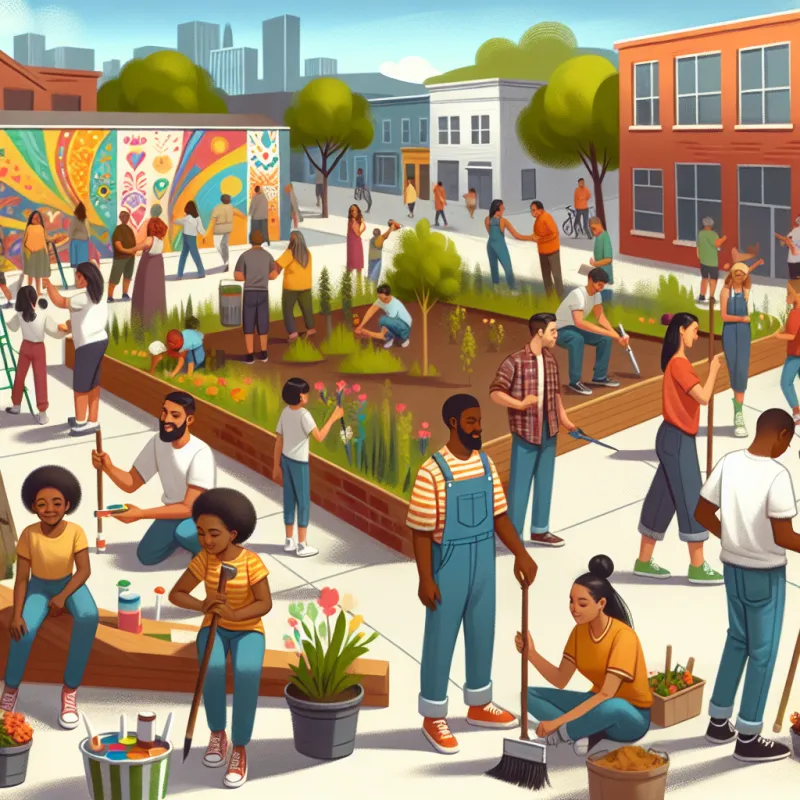
Photo: community refrigerator outdoor painted with food shelves neighborhood mutual aid, via homesight.org
On a Tuesday morning in a church parking lot outside Columbus, Ohio, a woman in gardening clogs opens a refrigerator painted with daisies and peers inside like she’s checking the weather. She moves a carton of eggs to the front, shifts a bag of oranges, and adds two loaves of sourdough from a bakery that closed yesterday. Nobody asked her to do this. Nobody is watching. She closes the door, wipes a smudge from the handle, and drives off.
This is the unglamorous, deeply ordinary scene playing out around community fridges in 2026. The idea is simple: a publicly accessible refrigerator, usually outdoors, stocked with free food. Take what you need. Leave what you can. The model traveled from Berlin sidewalks and New York storefronts into American church lots, community-center stoops, and the edges of strip malls. But the story now isn’t the novelty. It’s the routine.
A Box, a Shelf, and a Very Public Refrigerator
Most community fridges don’t look like charity. They look like a neighbor’s garage sale got a design upgrade. Bright paint, a chalkboard sign, maybe a little roof. Some are wired into a host building’s electricity; others run on a dedicated line with a volunteer who checks the temperature. Inside, you’ll find a shelf of canned goods, a drawer of produce, and a dairy section that is either reassuringly full or suspiciously warm.
The rules are posted on the door, usually laminated and slightly warped from rain. Wash your hands. Label homemade items. No raw meat. No expired dairy. Don’t leave something you wouldn’t serve your own family. The etiquette is the whole engine. Without it, a fridge becomes a dumpster with better branding.
The Etiquette Is the Whole Engine
There is a particular social dance to a community fridge. People arrive at different speeds. Some pull up with a car trunk full of surplus zucchini from a garden that got out of hand. Some walk over with a single bag of bagels. Some come because money is tight and the fridge is closer than the food pantry. All of them are participating in the same small civic experiment.
The etiquette gets tested in tiny ways. Someone leaves a half-eaten birthday cake. Someone else leaves a note: “Please only whole cakes.” A volunteer posts a photo of a mysterious casserole with no date and a caption that reads, gently, “We love you, but we cannot accept mystery casseroles.” These moments are funny only in retrospect. In the moment, they are the friction of shared space.
Logistics, Locks, and the Occasional Lasagna Dispute
The logistics are less charming. Refrigerators break. Volunteers burn out. Zoning rules get weird. A fridge needs power, a host, a cleaning schedule, and someone willing to answer a text at 9 p.m. about a suspicious smell. In some towns, a church or mosque or library serves as the anchor. In others, it’s a neighbor with a garage outlet and a high tolerance for foot traffic.
Then there’s the lasagna problem, which is not really about lasagna. It’s about homemade food and trust. A tray of lasagna can feed six people or make six people nervous. Community fridges handle this differently. Some accept homemade items with labels and dates. Some don’t. The disagreement is rarely loud. It’s a comment on a neighborhood thread, a revised sign, a quiet rule change. The fridge keeps running.
Why It Counts as a Third Place
A third place is supposed to be somewhere that isn’t home or work, where people bump into each other and become slightly more than strangers. Bars and coffee shops get that label. So do parks and libraries. A community fridge is a stranger third place because it asks for something besides money. It asks for judgment and restraint. Don’t take everything. Don’t leave garbage. Notice what’s missing.
That’s why people keep coming back. The fridge is a small daily referendum on whether we can share space without a referee. It is also, honestly, a good place to get rid of extra tomatoes without making a whole thing of it.
What the Fridge Reveals About 2026 Neighborliness
In 2026, American neighborliness is often mediated by apps and group chats. The community fridge is a physical counterweight. It is not a charity portal. It is a box on a corner that says: someone nearby might need this, and someone else nearby might have it. The transaction is anonymous enough to preserve dignity and public enough to build familiarity.
That balance is fragile. Fridges disappear when hosts move or volunteers quit. They get vandalized, sometimes. They get overstocked with Thanksgiving pies and understocked in February. But the ones that last tend to be boring in the best way. They become part of the block’s rhythm, like the mail truck or the guy who walks his dog at 6:45 every morning.
The Small Daily Drama Is the Point
The woman with the sourdough doesn’t announce herself. She doesn’t post a photo. She just stocks the shelf. Later, a teenager takes a loaf. Later still, someone leaves a jar of peanut butter and a note that says “thank you.” The fridge hums. The parking lot empties. Tomorrow, someone else will check the temperature and wipe the handle.
That’s the whole revolution, if you want to call it that. Not a grand gesture. A painted box, a shelf, and a stranger who leaves the zucchini and takes the bread. In a country that often talks about neighborliness as a lost art, the fridge suggests it might just be a habit. And habits, unlike slogans, need to be practiced every day.