A Sign, a Seat, and a Stranger: The Chat Bench Experiment Comes to American Parks

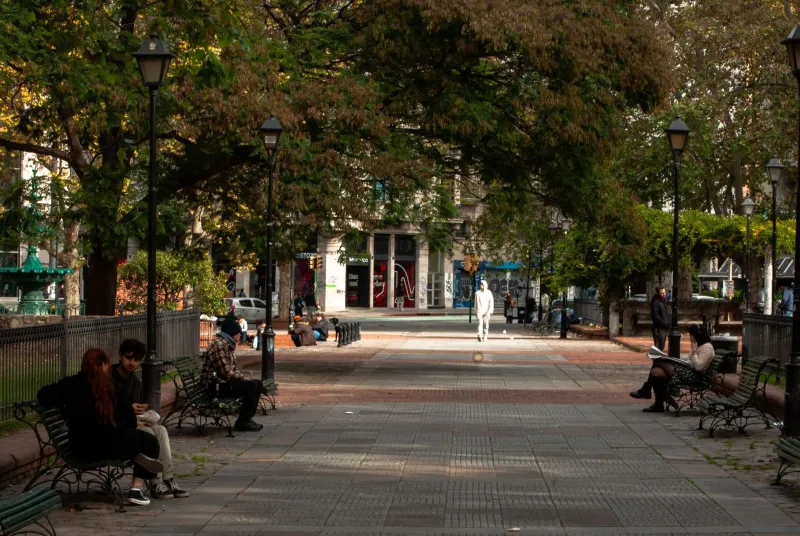
Photo by Photo by Roundtrip Bulgaria on Unsplash on Unsplash
On a mild Saturday morning, a bench near a farmers market can look like any other piece of civic furniture: slatted wood, a little shade, maybe a stray leaf. Then you notice the small sign. Happy to chat. Sit here. No app. No RSVP. No name tag. Just an opening line attached to a place to sit.
That is the basic idea behind chat benches, a quietly spreading bit of public-space design that has moved from British villages and coastal paths into American parks, town squares, and library lawns. The concept is almost aggressively uncomplicated: put a bench in a good spot, add a friendly prompt, and let strangers decide whether to talk.
The case for a very low-tech social network
Most solutions to loneliness arrive with a calendar invite. There is a meetup, a support group, a volunteer shift, a committee. All of those can help, but they also ask something of people who may already be running low on social energy. A chat bench asks almost nothing. You sit. You read the sign. You choose.
That small amount of choice matters. A chat bench is not a forced conversation station, and it should not become one. The sign works best as an invitation, not an assignment. If someone wants to eat a sandwich in silence, the bench still does its job as a bench. If someone wants to say hello, the sign gives them permission to try.
The format has roots in British community campaigns that began putting “Happy to Chat” signs on public benches in the late 2010s. The idea crossed the Atlantic in small doses—sometimes through parks departments, sometimes through a library or neighborhood group, sometimes through one resident who saw a photo online and thought, We could do that here. By 2026, it has become the kind of modest civic experiment that towns can test without a consultant, a app developer, or a ribbon-cutting ceremony.
Why a plank of wood can do real work
A chat bench is not magic. It will not fix isolation, mental health gaps, or the fact that many Americans live far from the people they know. But it can lower what researchers like to call the activation energy of a social interaction. That is a fancy way of saying: it makes the first hello easier.
Part of the effect is environmental. A bench gives two people a shared place to look—at a path, a playground, a garden—instead of requiring the intense face-to-face stare of a first meeting. Side-by-side seating can feel less confrontational than a table. A public setting can feel safer than a stranger’s front porch. And a sign does the awkward opening work for you. You do not have to announce that you are looking for company. The bench announces it for you.
There is also a timing benefit. Parks are full of people who are already pausing: waiting for a spouse, resting after a walk, killing ten minutes before a prescription is ready. Chat benches catch those in-between moments. They turn dead time into a chance for a small, low-stakes exchange.
What separates a good chat bench from a lonely one
Location is the first test. A bench tucked behind a maintenance shed is not a social experiment; it is a place to be alone with your thoughts. The best spots have foot traffic, shade, a clear view, and a reason for people to linger. Near a playground, a dog park, a library entrance, or a weekly market is usually better than a remote corner of a large green space.
The sign matters, too. Short is better than clever. “Happy to chat” is clear. “Social engagement seating initiative” is not. Towns should avoid wording that sounds like a surveillance program or a mandatory icebreaker. A simple line, a durable material, and a readable font will do more than a paragraph of instructions.
Accessibility deserves more attention than it often gets. A chat bench should be reachable by a paved path, have armrests if possible, and sit near accessible parking or transit stops. If the bench is the only seat in the area, it should not be monopolized by a single regular. And if a town installs one, it should be prepared to clean it, repair it, and replace the sign when the weather gets to it.
The etiquette part is not optional
Chat benches work only if people respect the exit. A person who sits down is not trapped. A headphone, a book, or a closed posture is a signal. The sign invites conversation; it does not override the right to be left alone. Towns can help by keeping the prompt light and by avoiding language that suggests the bench is a service for “lonely people,” which can feel stigmatizing.
Some communities have paired benches with informal “bench hosts”—a library volunteer or senior-center regular who sits for an hour at a busy time and helps break the ice. That can work, but it is not required. In many places, the bench itself is the host.
How to pitch one in your town in 2026
If you want a chat bench in your local park, start with the parks and recreation department, not with a drill. Most towns have rules about what can be installed on public property, and a guerrilla bench is more likely to be removed than celebrated. Ask whether the department has an adopt-a-bench program, a donation process, or a pilot program for small civic improvements.
Bring a one-page proposal. Name a specific bench or a specific location. Explain why that spot has foot traffic and shade. Say who will maintain the sign. Offer a modest budget for materials, or ask whether a neighborhood association, library friends group, Rotary club, or local business will cover it. Suggest a 90-day trial. And ask what the town needs in terms of permits, liability, and accessibility review.
Then be patient. A chat bench is a small idea, but it still has to move through a system. The good news is that the ask is inexpensive and easy to explain. You are not proposing a new building. You are proposing a sign, a seat, and a reason for neighbors to stop treating each other like scenery.
A front porch without the porch
American towns have long romanticized the front porch as a place where neighbors wave, gossip, and keep an eye on the street. Not every town has porches anymore, and not every neighbor has the time to use one. A chat bench is a modest substitute: a shared edge between public and private life, with a sign that says the edge is open.
It will not solve everything. It might not even start a conversation every day. But in a country that has spent years building more ways to connect and still feeling a little lonely, there is something appealing about a solution that requires only a seat and a willingness to say hello.